
Geographers, if you want to succeed in AP Human Geography, you need to understand what the course expects from you. You need to stay organized, review each topic as you learn it, and apply vocabulary to real world situations.
You do not need to be a geography expert or spend hours studying every night. You need a simple routine that helps you keep up with a faster paced class and learn from your mistakes. I know that sounds like common sense, and it is easier said than done, but I assure you that following these tips can help you start your AP class on the right foot.
For many students, AP Human Geography is their first AP class, which can make the first few weeks feel intimidating. There is often more homework, more vocabulary to learn, more models to understand, and more challenging test questions than you are used to.
That can feel overwhelming, but it does not mean you do not belong in this class. It simply means you need to learn how to be an AP student.
With that in mind, here are 10 practical AP Human Geography tips that can help you adjust, earn a good grade, and feel more confident throughout the school year.
1. Understand How Your Grade Is Calculated
This is something you should do for every class. Do not wait until the end of the quarter to figure out what affects your grade. During the first week, read the syllabus and identify:
- How much of your grade comes from tests and quizzes.
- How homework, projects, or participation are graded.
- Whether late work is accepted.
- Whether corrections or retakes are allowed.
- How often grades are updated.
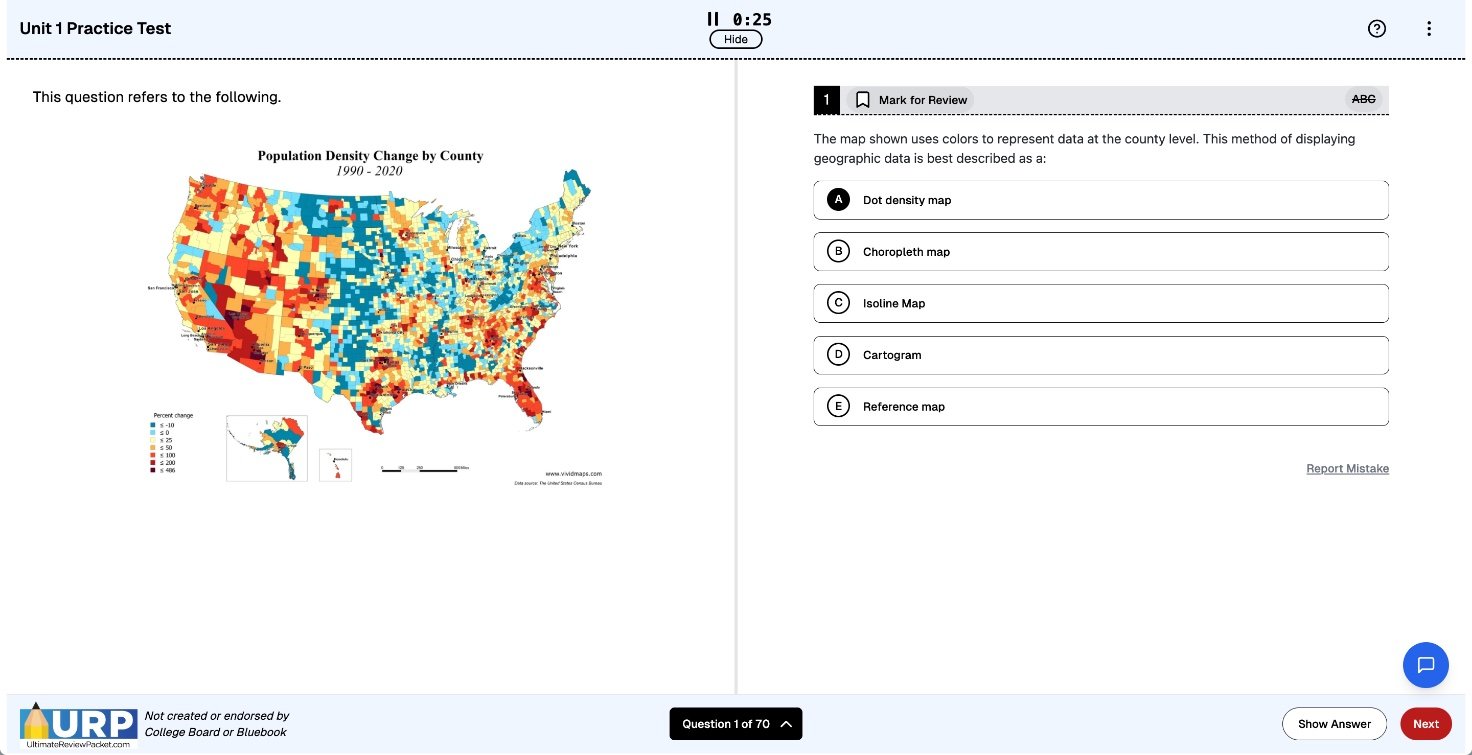
You might be thinking, “How does this help me?” Think of it this way: imagine that tests make up 60% of your grade while homework makes up 20%. Completing every homework assignment is still important, but improving how you prepare for tests will have a greater effect on your final grade. Knowing this helps you decide where to focus your time and energy. It can also show you which skills need the most attention, in this case, test preparation.
In this case, taking practice tests in AP Classroom or using Exam Slayer to complete practice exams will help you much more than simply finishing a homework assignment, because you will be actively improving your test taking skills.
2. Find a Way to Take Notes That Helps You Think
Trying to copy every word from a slide or textbook can leave you with pages of notes that are difficult to use. Instead, focus on the information that helps you understand the topic. Remember, this class is about understanding how concepts work and shape the world around you. You do not need to memorize dates or a long list of names. This is not a history class.
For each major concept you learn, try the following:
- Write a short definition in your own words.
- Add a real world example of the concept, or simply an example that makes sense to you.
- Write a one sentence explanation of why your example represents the concept.
- Identify one connection between the concept and something else in the course.
Now, I can already hear you saying, “Mr. Sinn, this is a lot of work.” And honestly, yeah, it is. But if you do this consistently, I can pretty much guarantee that it will improve your understanding of the course.
For example, you could define urbanization, identify a rapidly growing city, explain why people are moving there, and connect that growth to the demographic transition model.
3. Connect Vocabulary to Real Places
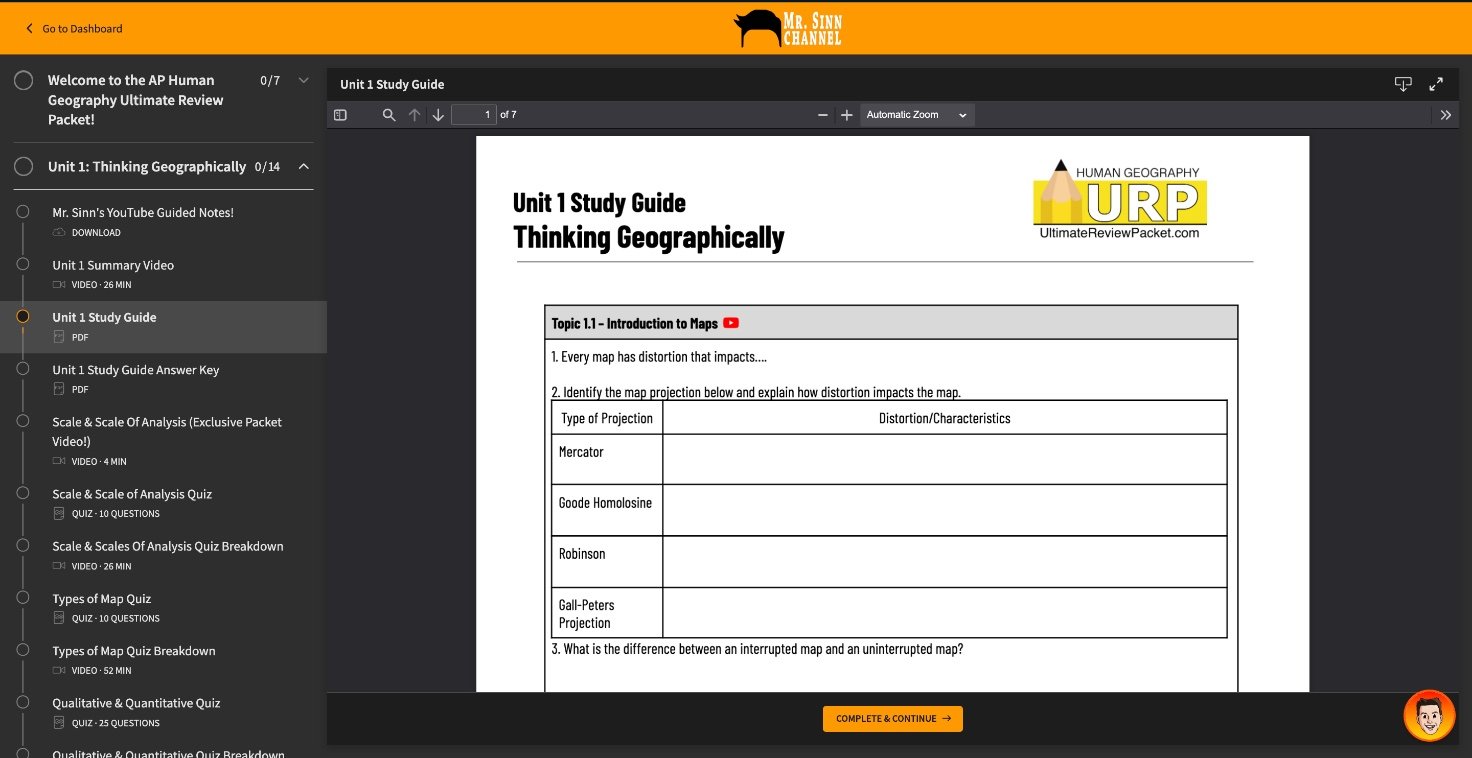
AP Human Geography introduces a lot of new vocabulary, but memorizing definitions alone will not prepare you for most class questions. Teachers often give you a real world scenario and ask you to identify or explain the relevant concept. You may also see similar terms grouped together on the AP exam, so a strong understanding of the course vocabulary will help you both in class and on the exam in May.
When studying vocabulary, I recommend that you do not study terms in isolation. Instead, study each term with an example. Understanding the definition of the term and being able to have an example on hand will make it easier for you to remember all the different terms in this course.
Term + Example + Explanation
If the term is centripetal force, you might choose a shared national holiday as your example. Then explain how the celebration can unite different groups by strengthening a common identity.
The explanation is the most important part. It proves that you understand the relationship between the term and the example.
4. SPACE OUT YOUR STUDYING! Review in Small Amounts Each Week
Honestly, you should do this for every class you take. Spacing out your studying greatly improves how effectively you learn. A short weekly review is more effective than one long study session the night before a test.
Try this 30 minute weekly routine:
| Time | Task |
|---|---|
| 5 minutes | List the main ideas from the week without using your notes. |
| 10 minutes | Review the terms or examples you could not remember. |
| 10 minutes | Answer a few practice questions without notes. |
| 5 minutes | Correct your answers and record what confused you. |
You can divide this into two 15 minute sessions if that fits your schedule better. The goal is consistency, not perfection.
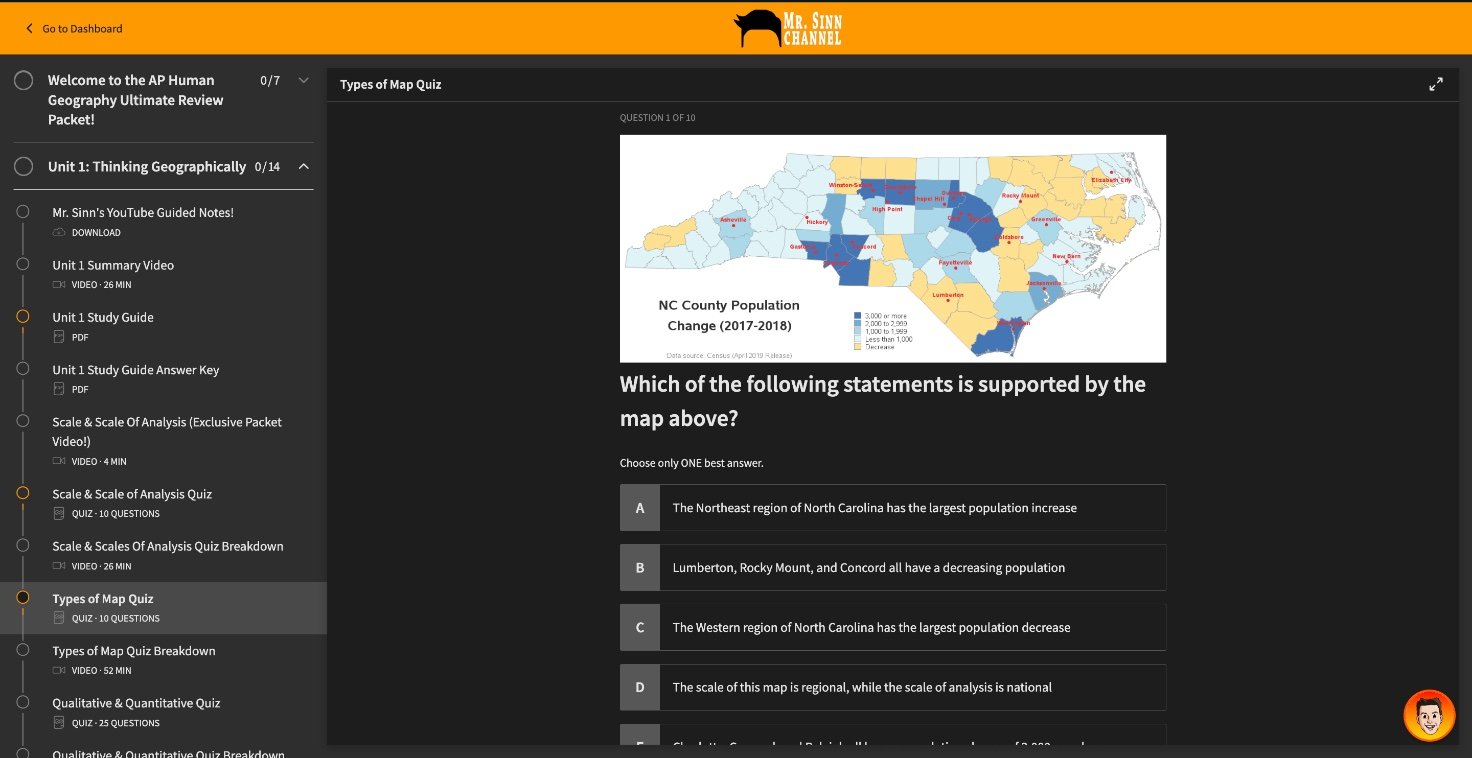
To help, you can use the practice quizzes, tests, and activities in my Ultimate Review Packet and Exam Slayer. These resources let you practice concepts as you go instead of cramming the night before the exam.
5. Prepare for Unit Tests
This tip builds on the last one, which should show you just how important it is to space out your studying. Remember, you need to give yourself enough time to discover what you do not understand.
If you cannot space out your studying over a week or more, at least try this three day method.
Three Days Before the Test
List the unit’s main topics and identify the ones you understand the least. Start with your weakest area instead of repeatedly reviewing your favorite topic. Highlight all the vocabulary, models, and theories you learned in the unit.
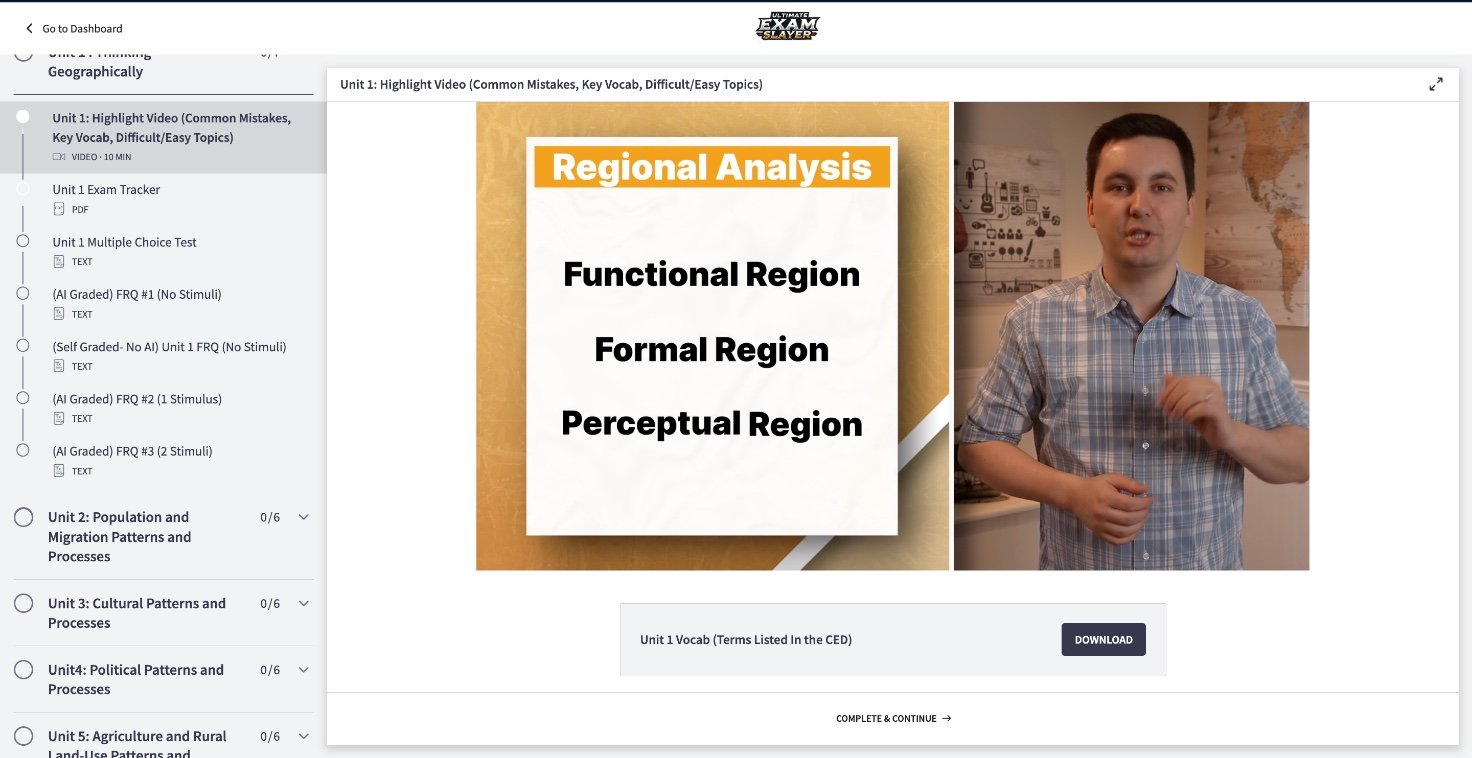
After reviewing, take a practice test without notes. Do not worry about getting every question right, just do your best! If you need a practice exam, check out my Exam Slayer. It includes practice unit exams for every unit in the course, plus exclusive videos that break down test skills.
Two Days Before the Test
Review yesterday’s test results and identify the concepts you missed. Spend time reviewing them and make sure you understand your weak points. This step is key: you need to learn from your past mistakes. The best part of taking practice tests is that they show you what you know and what you do not know, so take advantage of that information before your test.
After reviewing your practice test, go through the vocabulary, models, and theories one more time. Then take another practice quiz or test.
One Day Before the Test
On the last day, begin by reviewing the concepts you missed during the previous two days. If certain concepts keep tripping you up, look for different real world examples or connections that could help them make sense.
Review your mistakes, practice confusing terms, and explain the unit’s most important ideas out loud. Avoid trying to relearn the entire unit late at night.
6. Learn from Every Missed Question
Whatever you do in this class, do not give up after a bad quiz or test score. A disappointing grade is more useful than you might realize. It shows you what you need to study, where your understanding is weak, and how you can improve. Do not just look at the score and put the assessment away.
For each missed question, ask:
- Did I misunderstand a vocabulary term?
- Did I know the definition but fail to apply it?
- Did I misread the map, graph, or question?
- Did I confuse two similar concepts?
- Did I run out of time?
- Did I change a correct answer without a good reason?
If you keep track of missed questions and why you missed them, you will soon begin to see a pattern.
| Question or Topic | My Mistake | Correct Reasoning | What I Will Do Next Time |
|---|---|---|---|
| Population density | Confused arithmetic and physiological density | Physiological density compares people with arable land | Check which type of land is used in the calculation |
Over time, you will see where you are struggling and learn how to improve your studying.
Seriously, this tip is huge! Many of my students struggled in the first few units of the course, especially with tests. It was not until we reviewed their test results that we could see exactly where they were struggling. After identifying their weak points, we created better study plans that helped turn those weak points into strengths.
7. Seriously… Ask for Help
Many students avoid asking questions because they think everyone else understands the lesson. That could not be further from the truth. Everyone in this class is learning the material for the first time! In my experience, the students who asked the most questions were often the same students who appeared to understand everything.
If you do not understand something in class, ask a question. You want to earn a good grade, and your teacher wants you to earn a good grade, so why not ask? I mean, what else are you going to do, sit silently and stay confused?
8. Use Outside Resources with a Purpose
Watching a review video can help, but only if you have a purpose. Before using any outside resource, identify your goal. Also, make sure you are actively studying while you use it. Passively watching a video will not lead to a deeper understanding.
| If you need to… | Try… |
|---|---|
| Understand a confusing topic | Watch one of my AP Human Geography topic review videos on YouTube. Complete the guided notes while you watch to improve your retention. |
| Organize your notes | Complete guided notes or create a one page topic summary. |
| Prepare for a unit test | Take practice quizzes and exams in the Ultimate Review Packet and Exam Slayer. |
| Improve after a low score | Correct the assessment and practice the same skill with a new example. |
| Keep all seven units organized | Use the AP Human Geography Ultimate Review Packet throughout the year. |
If you decide to use any of my resources, remember that the Ultimate Review Packet focuses on learning and reviewing AP Human Geography content, while Exam Slayer focuses on test preparation and practice.
Together, they provide guided notes, study guides, review videos, practice questions, FRQs, and answer explanations. You can use them alongside your class throughout the year, not just as final review resources.
9. Manage the Workload Without Trying to Be Perfect
Your first AP class may take longer than your previous classes, especially at the beginning of the year. That does not mean every assignment should consume your entire evening.
Set a realistic time limit for each assignment. If a short reading assignment is taking far longer than expected, pause and ask what is slowing you down. Are you trying to memorize every sentence? Are you taking too many notes? Are you distracted? Maybe you just need a break!
Strong students do not complete everything perfectly. They learn how to spend their time where it will have the greatest effect.
10. Treat Your First AP Class as a Skill You Are Building
You are not expected to arrive on the first day already knowing how to handle an AP course. During the year, you will learn how to:
- Manage a faster pace
- Read more efficiently
- Take useful notes
- Prepare for FRQs and MCQs
- Analyze maps, images, and data
- Explain ideas with evidence
- Recover from a disappointing grade
Those skills will help you in AP Human Geography as well as in future AP classes, college courses, and careers.
Your first test does not predict your final grade. How you respond to that first test matters much more.
Well, there you have it, 10 tips to help you start on the right foot and crush your AP Human Geography class. I know many of these tips are easier said than done, but I hope you can put some of them into practice, reduce your stress, and improve your grade at the same time. If you need any help this year, do not hesitate to reach out. Remember: you can and will do this!
Mr. Sinn
Help me make the next one better
Any feedback you can give me helps me understand how to improve for the future!
Get the next one
I’ll email you when a new post goes up — that is the only thing this list is used for.