
Hello everyone! Happy September.
With the school year officially in full swing, I wanted to create something that would make the science practices of Unit 0 in AP Psychology more engaging. After hearing from teachers and students who found the AP Psychology summer activity helpful, I decided to build a new activity made specifically for Unit 0.
The Unit 0: Research Study Challenge asks students to read short excerpts based on real cases, studies, experiments, articles, and headlines. Students then apply the concepts listed in the science practices from the AP Psychology Course and Exam Description (CED).
The activity includes 22 cases, with five questions for each case. The opening questions focus on foundational skills, while the later questions gradually increase in difficulty and require deeper analysis.
The activity runs in the student's web browser, so it will work on virtually any device. (Computers work the best.) Students' answers are saved locally on the device they use. After completing the cases they selected, students can review and grade their responses, then print or save their work to turn in.
Before I explain the activity in more detail, I want to give a quick disclaimer. I am still working to improve these activities and make them as useful as possible for both students and teachers. One of the biggest challenges is writing cases and questions that are approachable for students without turning the activity into another "fluff" assignment.
If you have feedback, I would genuinely love to hear it. This is a new type of resource for me, and suggestions from teachers who use it in their classrooms will help me make future activities even better.
What is the activity?
The activity includes 22 cases, each built around a study, experiment, article, or headline. Students can choose whichever cases interest them, or they can select one of the prepared options: Start here, Core set, Challenge set, or All 22 cases.
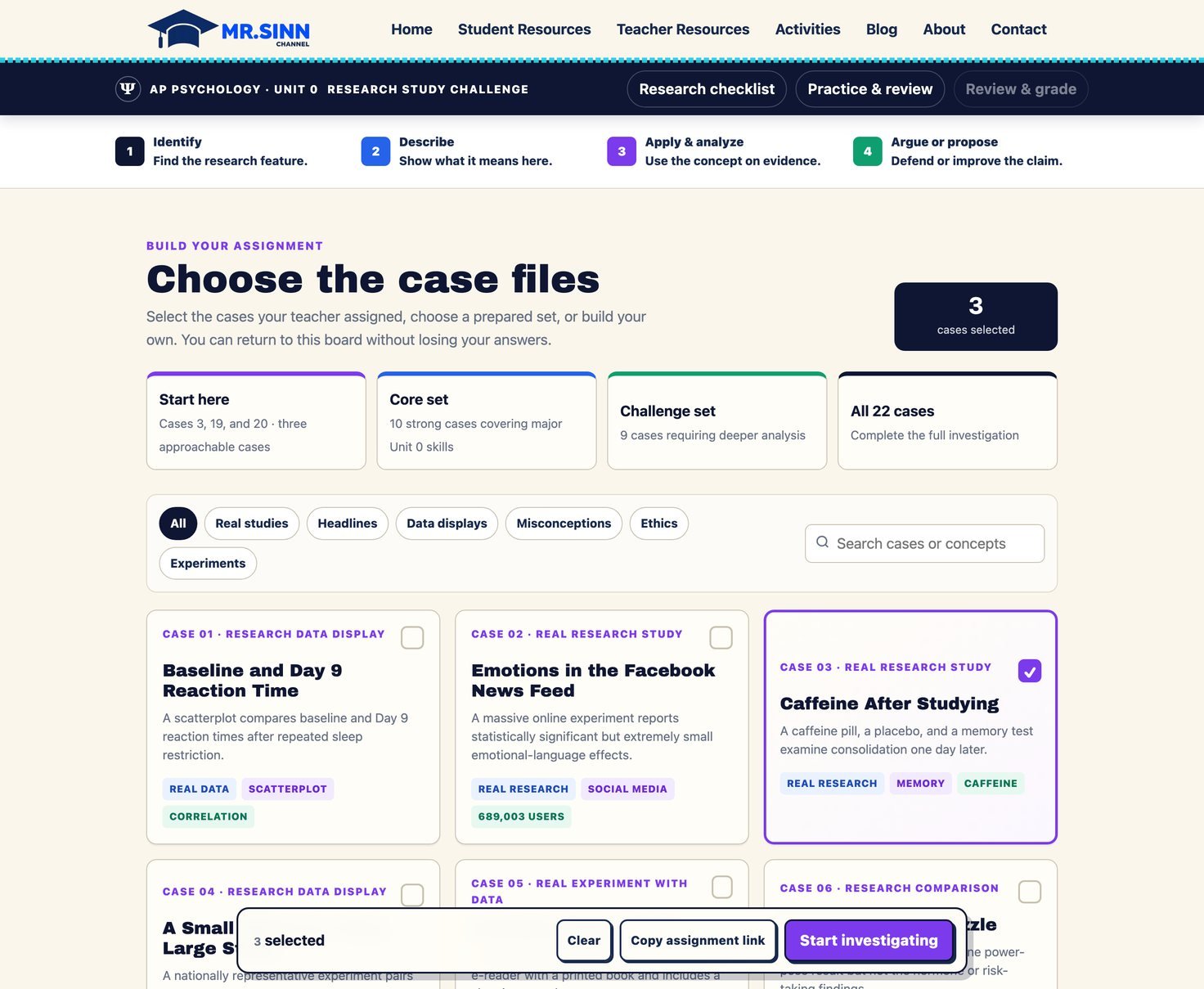
Once students select their cases, they can begin reading and answering the questions. If they get stuck, they should still make their best attempt to answer the question, because they will not be able to grade their work if they leave a question blank.
This can also be a great opportunity for students to work with a partner or in a small group. They can discuss the evidence, compare their reasoning, and help one another apply the course's science practices.
Creating a custom lesson for your students
As a teacher, you may want your students to complete specific cases. On the main page, you will see a Copy assignment link button.
First, select the cases you want students to complete. Then click Copy assignment link. This will create a URL that you can share with your students. When students open the link, the cases you selected will already be chosen for them.
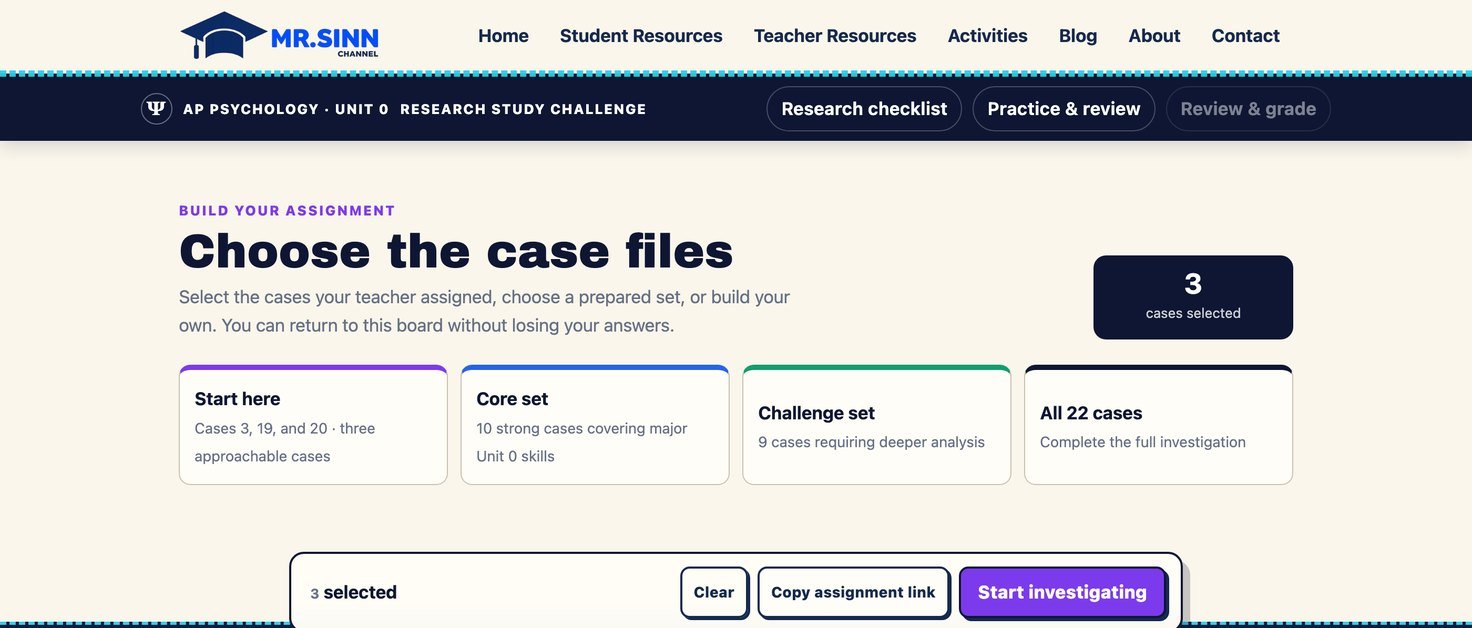
This makes it easy to assign the exact combination of cases that best fits your lesson, available class time, or students' needs.
Please note: students can still add other cases or clear the cases you selected.
Student questions and cases
As with the summer news activity, developing the questions was the most time-consuming part of this project. I did not want students to read full research studies, experiments, or articles this early in the school year. The challenge was creating meaningful questions using shorter and more approachable readings.
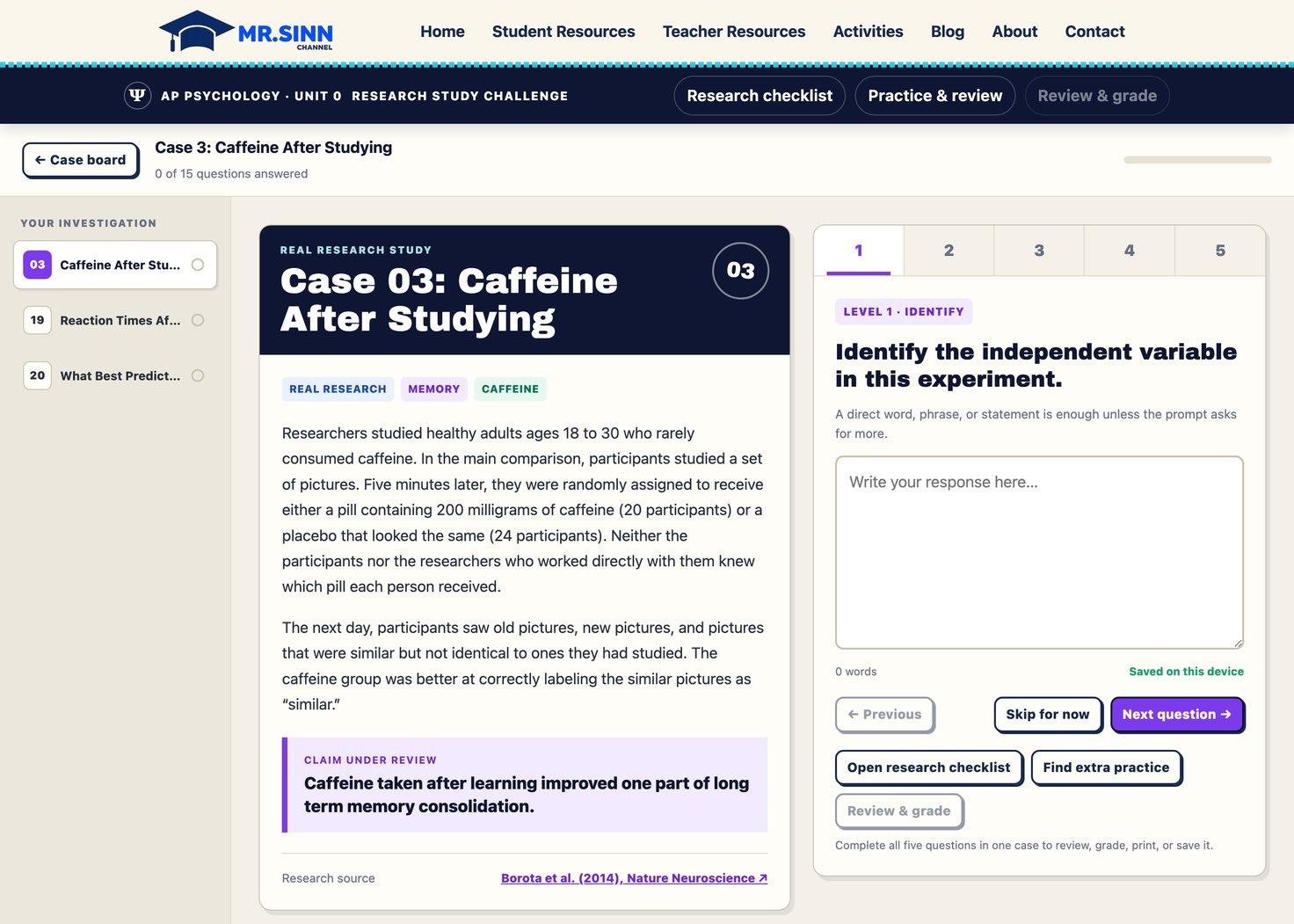
Because the school year is just beginning, the questions focus on the science practices from the AP Psychology CED. Each case includes five questions that climb the same ladder:
- Level 1 · Identify — find the research feature.
- Level 2 · Describe — show what it means in this case.
- Level 3 · Apply — connect the concept to the evidence.
- Level 3 · Analyze — explain what the evidence does and does not allow.
- Level 4 · Argue or propose — defend a claim or propose an improvement.
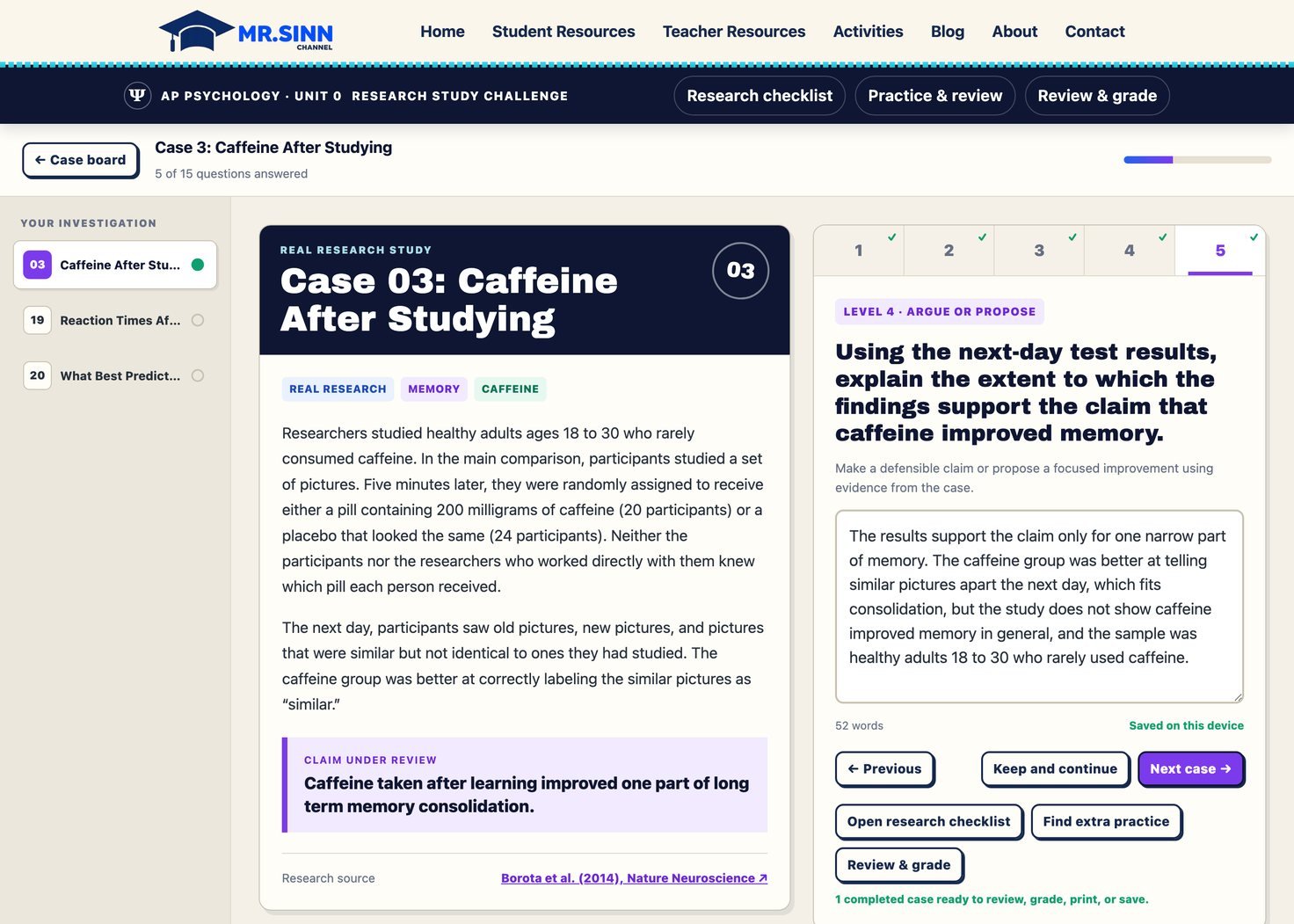
The cases introduce students to content they will encounter in Unit 1. This is intentional: it gives students an early look at upcoming psychological concepts while they practice the science practices introduced in Unit 0.
Students do not need prior knowledge of Unit 1 to complete the activity. The information they need is included in each case, and the questions are designed around the science practices they are currently learning.
Grading
After students answer all the questions for their selected cases, they can move to the review screen. There, they will see possible answers and can grade their own work.
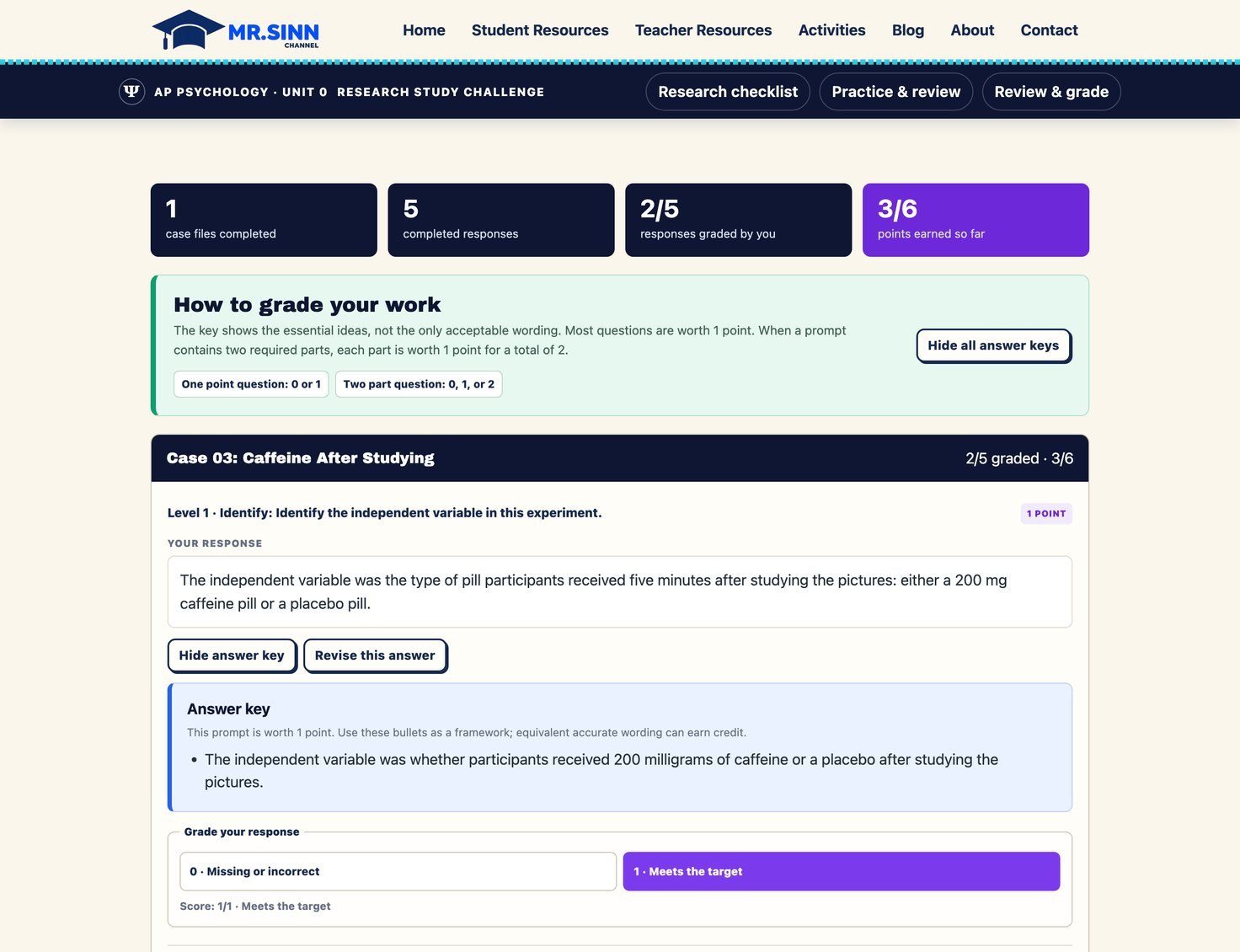
Students must attempt every question before reaching the final review screen. The goal is to encourage them to think through each question and make a genuine attempt instead of immediately skipping to the possible answers.
I may adjust this feature in the future, so please let me know what you think.
After reviewing and grading their responses, students can print or save their completed work. This gives them an easy way to turn in the assignment or show that they completed it.
Feedback
As I mentioned earlier, I would love to hear your feedback. I am still refining the length, format, wording, question difficulty, and features of these activities. Feedback from teachers like you will help me improve this activity and create stronger resources in the future.
My goal this school year is to release one new activity each month for AP Psychology and AP Human Geography. Some resources, including the AP Psychology worksheets, Ultimate Review Packet and Exam Slayer, will be paid resources. Others, like this activity, will remain free.
Well, that is all for now! Thank you again for all your support. I wish you and your students nothing but the best, and I hope you have a fantastic start to the school year!
Mr. Sinn
Help me make the next one better
Any feedback you can give me helps me understand how to improve for the future!
Get the next one
I’ll email you when a new post goes up — that is the only thing this list is used for.