
Hello there, psychology teachers!
I hope you are all doing well. This past week I was looking at the AP Human Geography Teacher Facebook group and saw a couple of teachers talking about using news stories from the summer to highlight geographic concepts in class. That conversation got me thinking, one thing led to another, and before I knew it I had gone down the rabbit hole and built a whole interactive activity around summer news stories. I thought the end result was pretty awesome, and I could not not make one for AP Psychology. So I decided to keep working and build a custom activity for AP Psychology as well.
When making this activity I wanted to create something that would introduce the different units and concepts of AP Psychology while requiring no prior knowledge from students. I also wanted it to be something that actually had students practicing and learning the course concepts.
The result is the Summer 2026 Case Files, which you can use today for free. No login, no signup, no cost to you. The lesson runs in your browser, so it works on any device. And if you would rather run it on paper, you can print the articles and questions and turn it into a station activity in class.
One quick note: student answers are saved locally on the device they are using. If students switch devices, their previous answers will not transfer.
What is the activity?
This activity consists of 24 cases, each one built around a real news event from the summer of 2026. Students pick up to four cases from the unit map that look interesting, read a short article, and answer three questions per case that connect to AP Psychology.
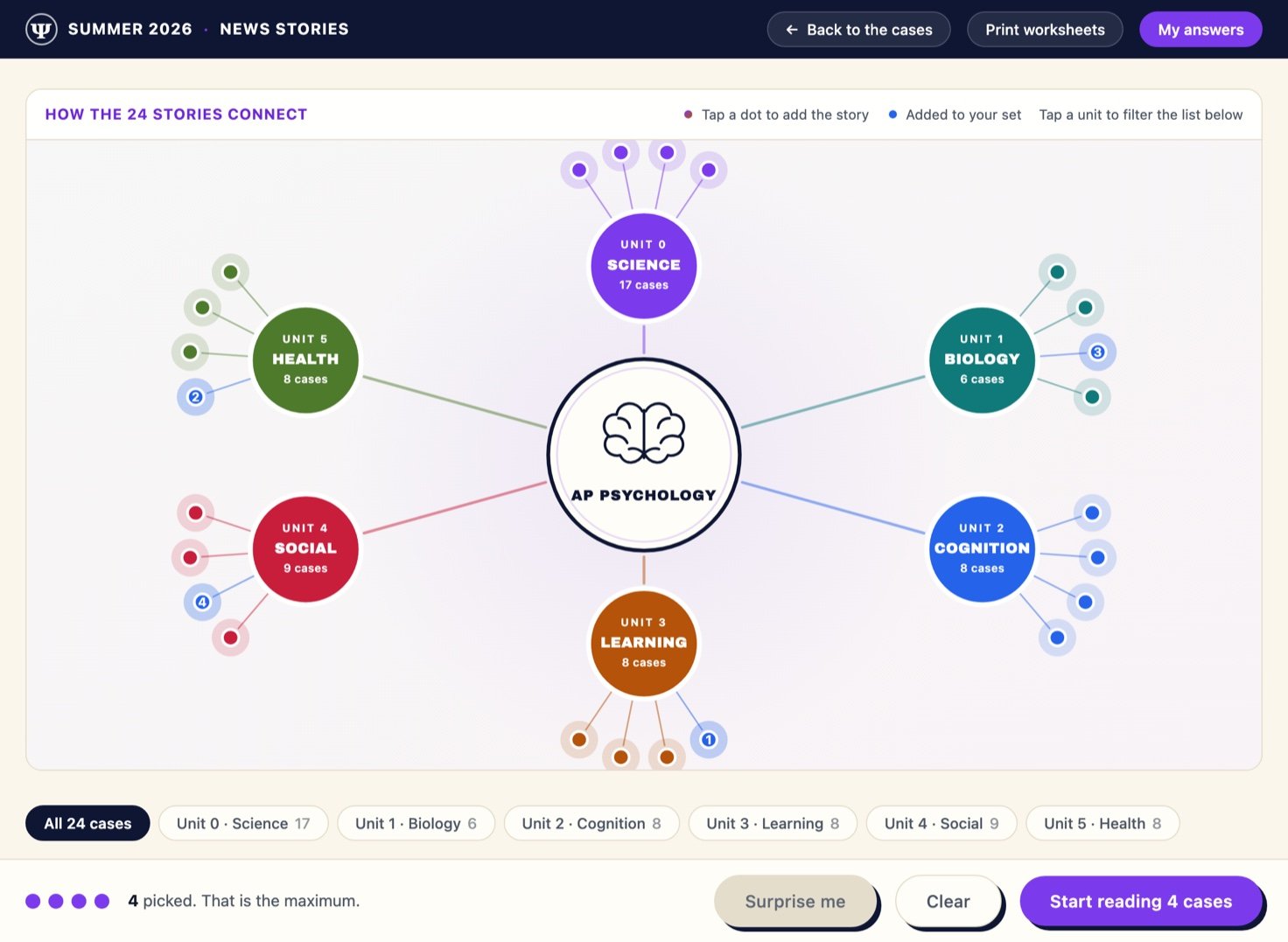
If students do not know what they want to read, they can click the Surprise me button and get four random articles. And if your school does not have a 1 to 1 program, you can select whichever cases you want, click Print worksheets at the top of the page, and use them with your students in class with good old paper and pencil.
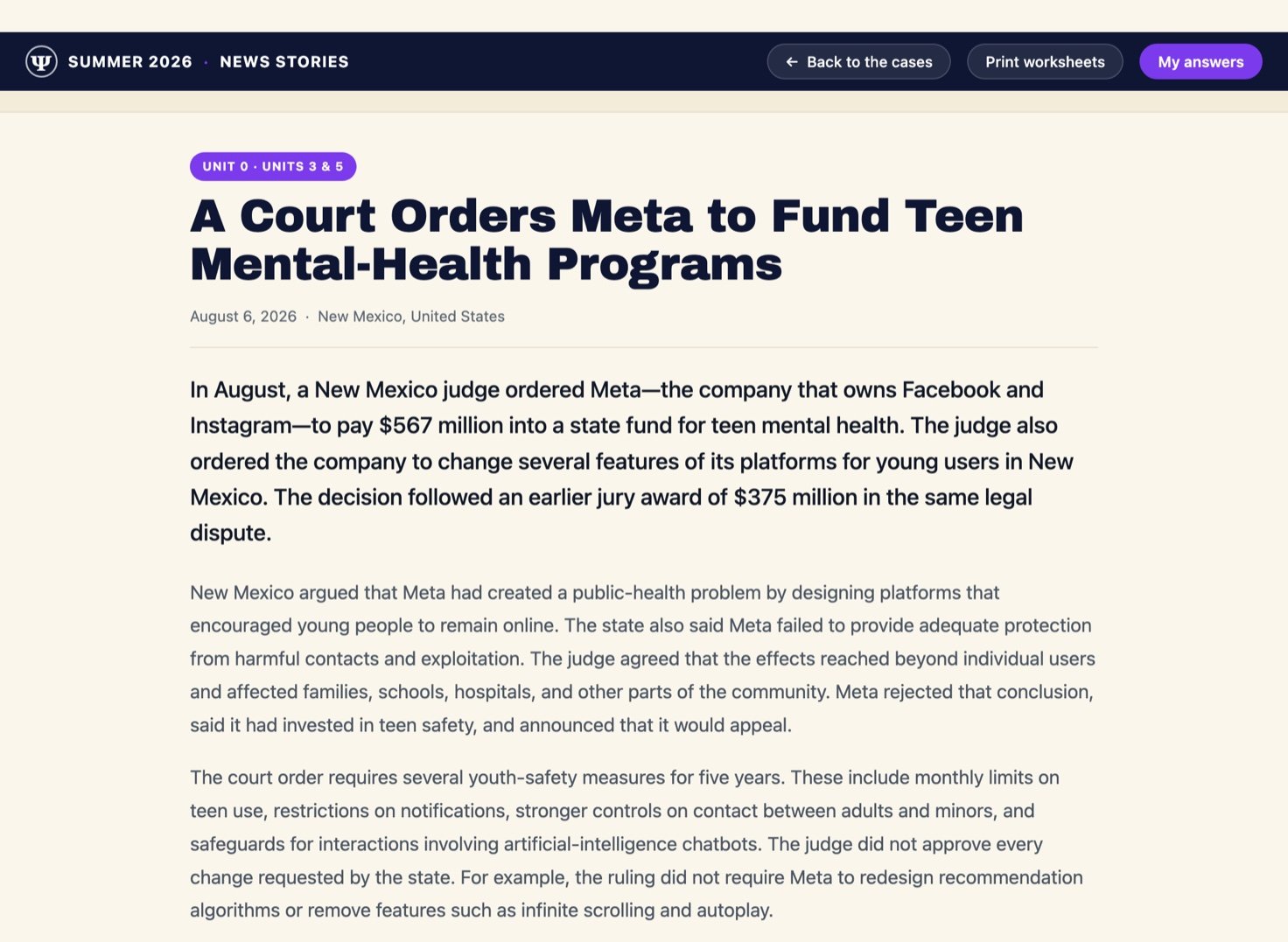
Student questions & CED alignment
One of the things that took the most time when designing this was figuring out how to have students connect to course concepts, vocabulary, and theories before they have learned them. I wanted to make sure this was not just a fluff assignment. So each case comes with an AP Psychology Toolkit, which defines and explains the course concepts students need in order to answer the questions. It also shows where in the CED the concepts are listed.
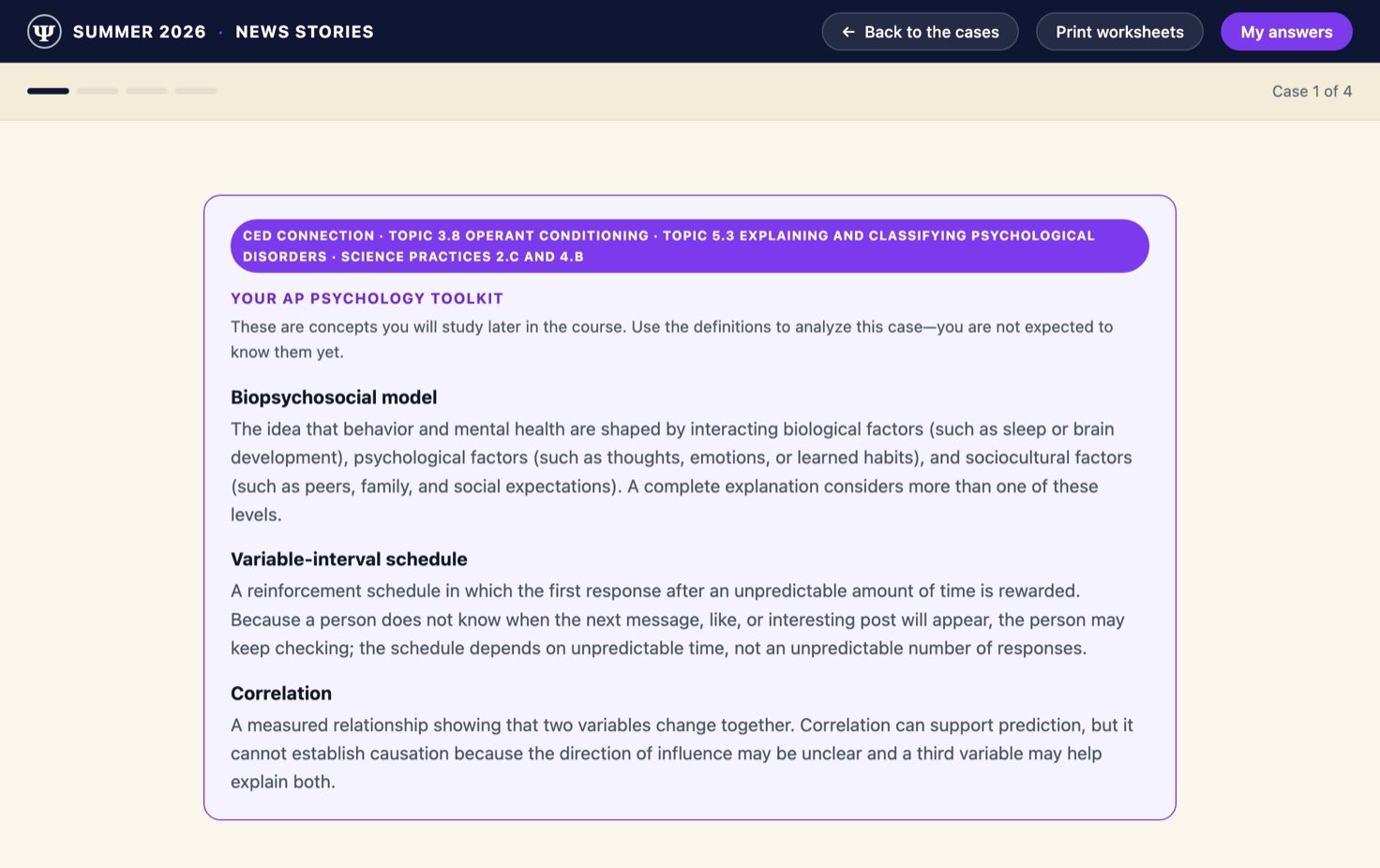
That way, the questions can ask students to apply AP Psychology concepts before they have truly learned them. The goal is to get students practicing with the terms early. They read the news story, see the terms that connect to it, and apply them in real time. Every case has the same three styles of questions:
- Use the Concept — students apply a CED term to the real world.
- Connect & Evaluate — students connect the CED term to the article and explain the connection.
- Transfer — students take that idea, term, or concept and apply it to a new situation.
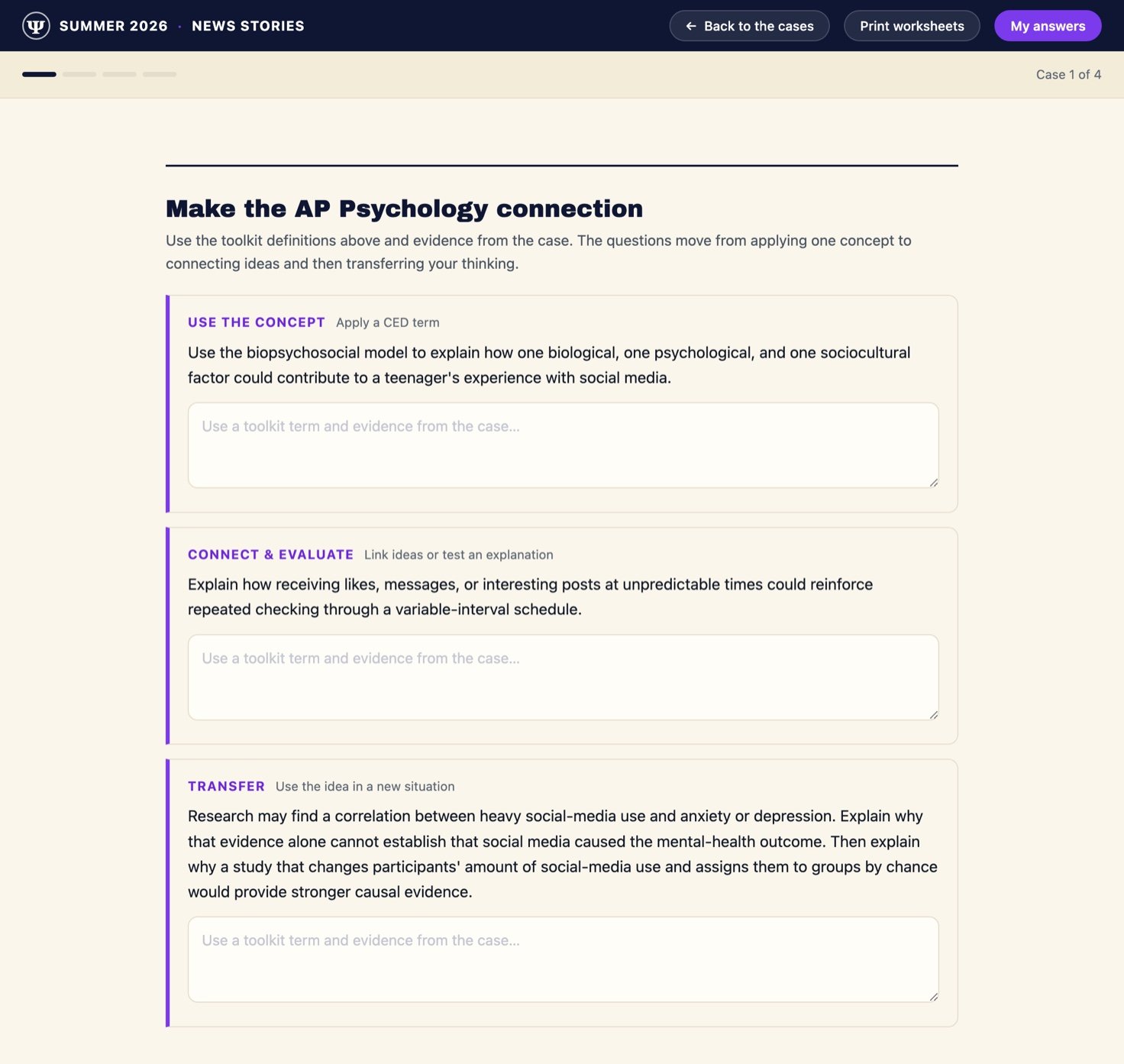
The Toolkit and this question structure together let students who have never taken this course start making connections on day one.
And when students figure out those connections early, it pays off later in the course when you teach the content for real.
Grading
When students finish their selected cases, they land on a review screen with all of their answers. There they can see possible answers and grade their own work.
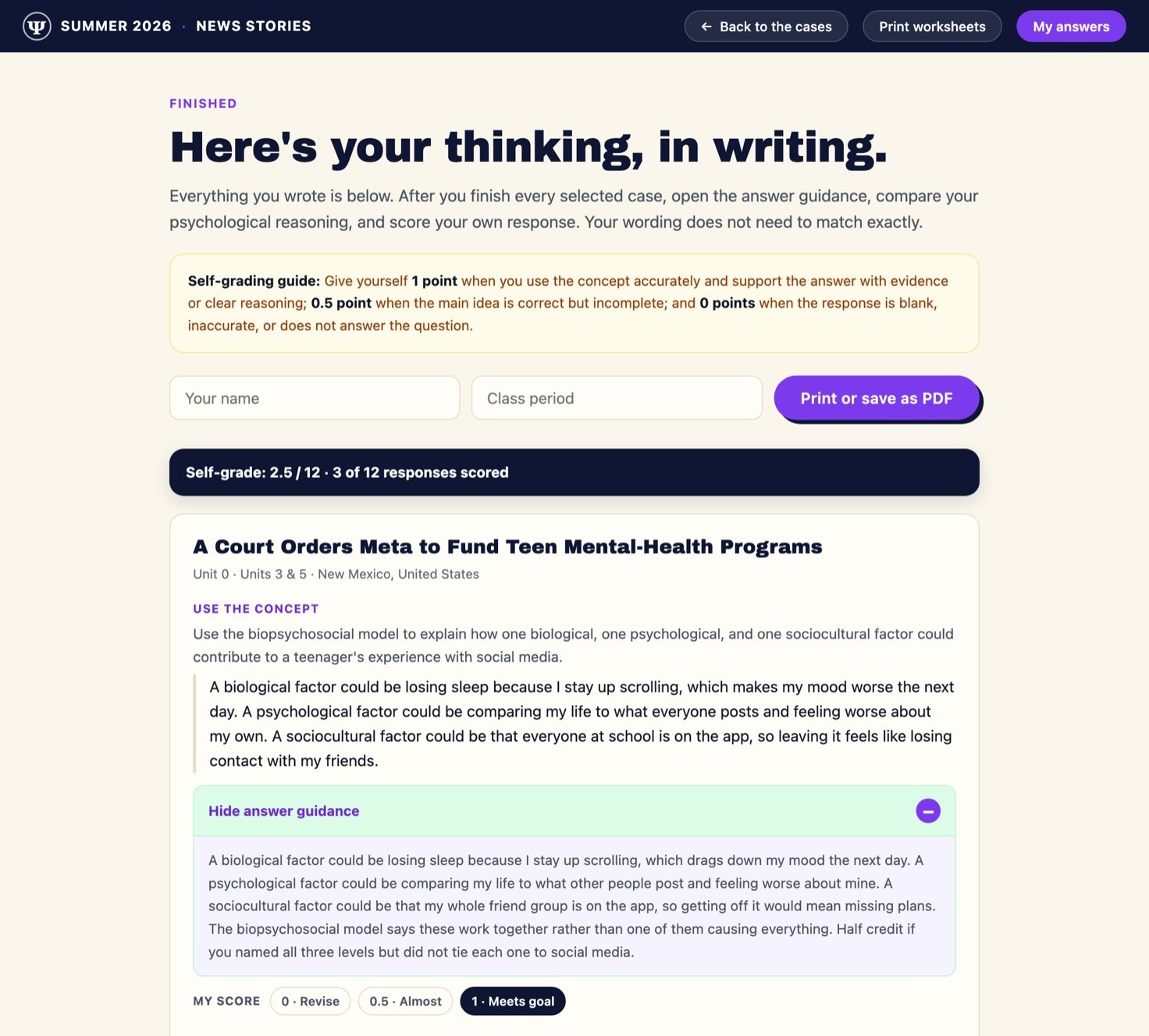
Once they have gone through and graded everything, they can click Print or save as PDF. That lets them share their work with you, and the printout even comes with a line for you to mark down your own points, just in case you do not think your student graded themselves correctly.
Just remember when grading that several of these questions have multiple correct answers. And for me, this assignment is more about students actively discussing the questions with each other, engaging with the material, and getting excited about psychology. I am less worried about whether my students wrote perfect answers and more interested in whether they engaged with the activity and content.
Different ways you can use it in your own classroom
Day one, instead of the syllabus
Break students into groups, have them pick articles, and get them discussing AP Psychology. When they finish their four articles you could have them pick four more, or have them find a news story of their own and connect it to three terms from the CED. I would suggest giving students a list of terms to pick from.
Jigsaw or gallery walk
If you do not want students on devices, print the articles and questions and turn this into stations. Each station gets four articles for students to read. Then put students into groups with one person from each article and have them share what they learned with their peers.
You can also do a jigsaw or gallery walk with student devices — just assign them the articles you want them to view online.
Got other ideas on how to use this? Feel free to reach out. I would love to hear from you.
Before you go
Well, that is it I think! Go check it out and see if it works for you and your classroom. Also feel free to let me know if you have any ideas on how to improve this or any questions.
Also, before I forget: as of right now this is built as a temporary lesson, so it will not be up forever. If teachers find value in it and would like more activities like this, or would like me to keep it updated as the year goes on, please reach out and let me know.
My goal this year is to create more teacher resources and activities. Some of them will cost money, like my AP Psychology teacher worksheets — which you can actually get for free if you place a bulk order of the Ultimate Review Packet. But plenty of others, like this one, will be free for anyone to use.
That is all for now. Thank you for checking out this activity, and good luck this school year. Remember, you can do this!
Mr. Sinn
Help me make the next one better
Any feedback you can give me helps me understand how to improve for the future!
Get the next one
I’ll email you when a new post goes up — that is the only thing this list is used for.